
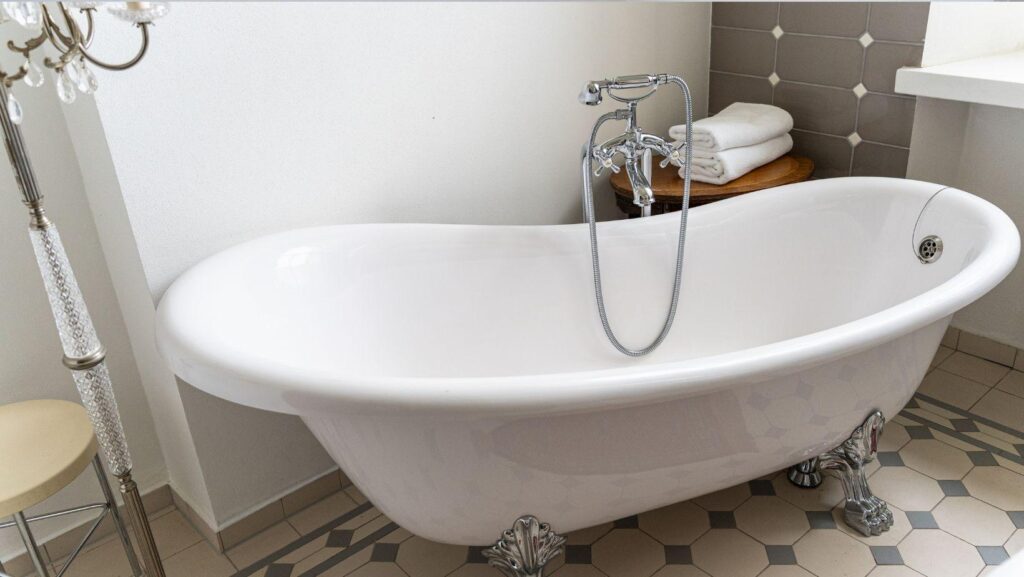
Few bathroom fixtures are as recognizable as clawfoot bathtubs. Their raised bowls and decorative feet can make a room feel collected rather than merely fitted out. Yet the appeal is not only historical. Today’s clawfoot tubs are available in different lengths, soaking depths, drain arrangements, and finishes, allowing the classic idea to work in bathrooms that range from faithful restorations to crisp contemporary remodels.
That versatility makes planning important. A clawfoot tub is visually lighter than many built-in models because the floor remains visible below it, but it still occupies real space and requires room for plumbing, cleaning, and safe entry. The right model should look at home from the doorway and feel comfortable from inside the tub. Both views count.
Clawfoot Tubs: Understanding the Main Silhouettes
The familiar roll-top form has a level rim and a softly curved interior. A single-slipper design rises at one end to support the back and shoulders. Double-slipper versions rise at both ends and often place the drain near the center, which can be useful when two people may bathe. Double-ended tubs keep both ends similarly shaped without the higher slipper profile. These distinctions affect comfort and plumbing, not only style.
When comparing clawfoot tubs, look beyond the overall length. Interior floor length, rim thickness, backrest angle, and soaking depth determine how the tub feels. A model with a dramatic exterior may have less usable room than a simpler one of the same nominal size. If possible, compare a dimension drawing with a tub you already know. Measure where your hips, shoulders, and feet would sit rather than relying on a photograph taken with a wide-angle lens.
Foot style changes the personality. Ball-and-claw details feel ornate, while cleaner feet can make the tub more transitional. Chrome reflects surrounding colors; dark finishes create a graphic outline; warmer metals can echo wood and aged brass elsewhere in the room. Matching every metal exactly is not mandatory, but repeated finishes should look deliberate.
Clawfoot Bath Tubs Need a Complete Plumbing Plan
Because clawfoot bath tubs stand away from walls, plumbing is often more visible than it would be with an alcove tub. That can be beautiful when supplies, waste, overflow, and faucet components are coordinated. It can also look unfinished when they are treated as separate last-minute purchases. Decide early whether the filler will be floor-mounted, wall-mounted, or attached to a tub designed for deck drilling.
Drain placement must align with the waste route below. Some tubs use a center or center-back drain; others may offer reversible arrangements. An external drain assembly becomes part of the design, while an internal arrangement hides more of the working parts. Neither is automatically superior. The choice depends on the product, access, and desired appearance.
Ask the plumber to review the manufacturer’s drawing before rough-in. The final location of a floor-mounted filler must account for spout reach, hand-shower movement, and access to valves. Supply lines should be protected from accidental knocks. The drain should remain serviceable where possible. Solving those details on paper is considerably cheaper than moving new plumbing across a finished floor.
Clawfoot Bathtubs for Sale: Compare the Whole Package
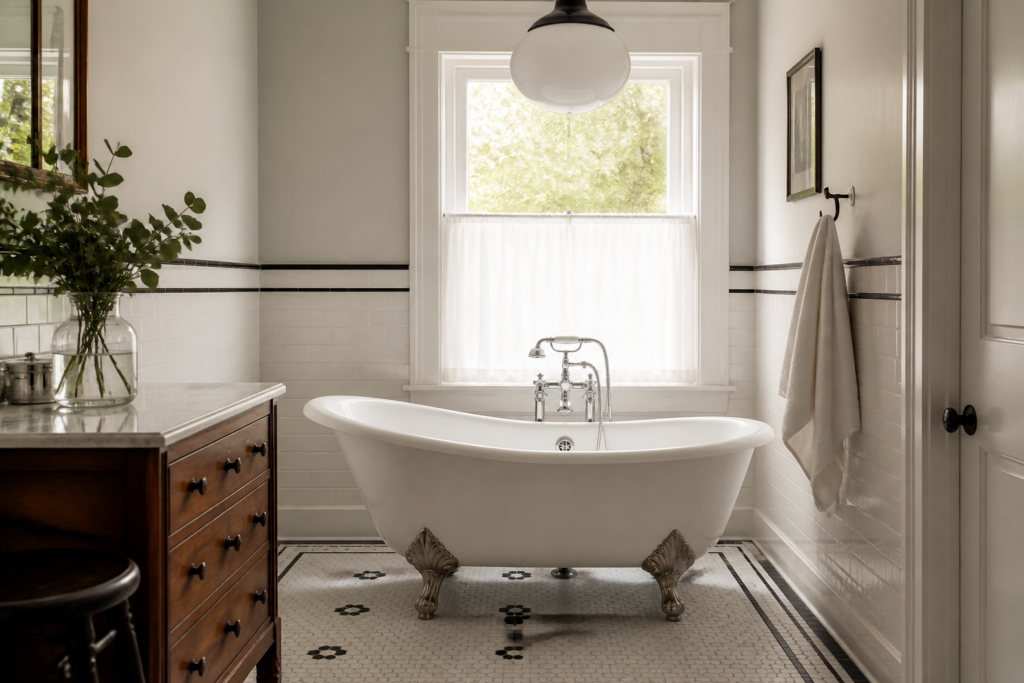
Search results for clawfoot bathtubs for sale can look deceptively similar. One price may include feet, drain, overflow, and tray, while another covers only the tub body. Finish options may change the total. Freight, delivery conditions, and return rules matter because a tub is large, heavy, and vulnerable to damage if handled carelessly.
Create a like-for-like comparison. Record the material, dimensions, weight, included components, finish selections, warranty terms, and expected delivery. Add the faucet and any exposed supply hardware. Then include labor, floor preparation, plumbing changes, and disposal of the existing fixture. A clear total is more useful than a low product price surrounded by unknowns.
Inspect the delivery promptly. Check the exterior, rim, feet, and finish before installation begins. Keep the packaging until the contractor confirms that the correct model and components have arrived. Photograph any damage immediately and follow the seller’s process. This is practical advice for any bathtub, but exposed sides make surface condition especially visible on a clawfoot design.
Classic Clawfoot Tubs Without a Theme-Room Effect
The easiest way to use classic clawfoot tubs is to let the tub carry most of the historical character. Pair it with a restrained palette and a few related details rather than turning every object into a period reference. Simple wall tile, painted paneling, natural stone, or a quiet floor pattern can frame the silhouette without competing with it.
Color offers another route. A white tub with metallic feet feels familiar and adaptable. A dark or colored exterior can anchor a larger room, especially when that hue appears again in a vanity, window trim, or textile. Before choosing a bold finish, test it beside the actual flooring and wall samples. Bathroom lighting shifts throughout the day, and a color that looks rich online may read differently under warm sconces.
Scale is crucial. A generous tub needs enough wall length and open floor around it to appear intentional. In a small room, a shorter model may preserve the same character while allowing a usable passage. Tape the footprint on the floor and add the filler location. Then stand where the door opens and where someone would dry off. If circulation feels awkward before the tub arrives, it will not improve after installation.
Cleaning, Safety, and Everyday Comfort
The floor below a raised tub remains visible, which is attractive but requires access. Leave enough room for a mop or cloth around the feet and plumbing. Follow the correct cleaning guidance for the tub material and decorative finishes; abrasive products can dull surfaces or damage plated components. Rinse residue and dry exposed hardware when water quality makes spotting noticeable.
Entry height and slip resistance deserve an honest look. A deep tub may provide an excellent soak but can be challenging for someone with limited mobility. Discuss grab-bar locations with the contractor before walls are finished, even if bars will be added later. A stable bath mat outside the tub and sensible placement of towels also improve daily use without changing the design.
A clawfoot tub earns its place when it is more than a photograph. The dimensions fit the room, the interior supports the bather, the exposed plumbing looks intentional, and the floor can actually be cleaned. Plan those quiet details carefully, and the classic silhouette will bring personality to the bathroom without asking the household to sacrifice comfort or common sense.