
As enterprise networks grow more complex, the need for intelligent connectivity solutions has never been greater. Organizations are no longer working from a single data center; they are running workloads across private infrastructure, public cloud environments, and edge locations simultaneously. Managing this kind of distributed architecture requires a networking approach built for flexibility, performance, and security. Software-defined wide area networking has emerged as the technology of choice for enterprises navigating this shift, offering centralized control, dynamic traffic management, and native integration with cloud platforms. This guide evaluates seven of the leading SD-WAN solutions that specifically support hybrid cloud environments.
Why Hybrid Cloud Connectivity Demands a New Networking Approach
The traditional enterprise WAN was designed around the assumption that traffic would flow to and from a central data center. That assumption no longer holds. Today, applications live in the cloud, users work from distributed locations, and business-critical workloads require consistent performance wherever they run.
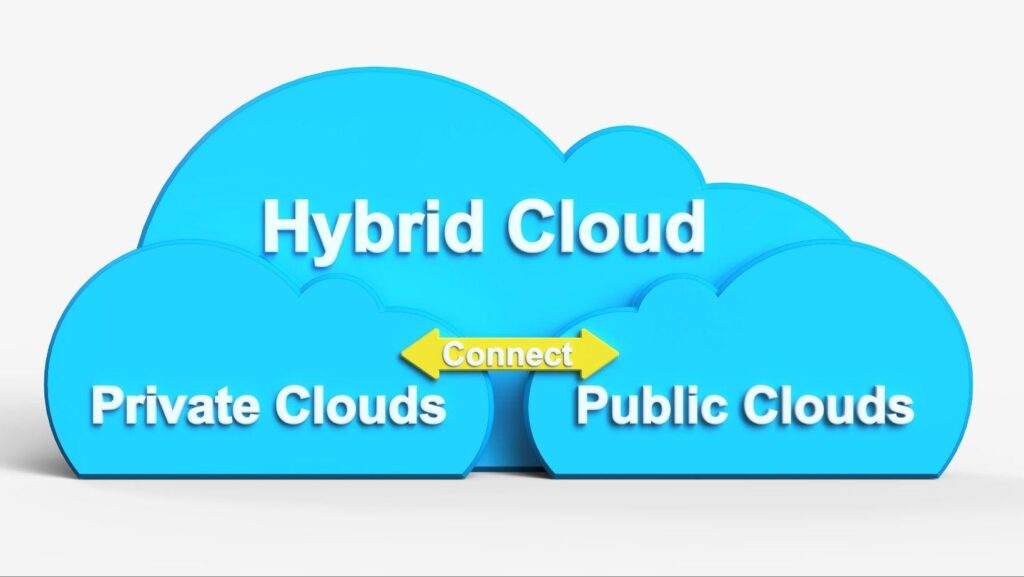
Hybrid cloud architectures combine private cloud resources with public cloud platforms, giving organizations both control and scalability. However, connecting these environments reliably and securely is a challenge that legacy WAN technologies were never designed to solve. SD-WAN addresses this gap directly by abstracting the network from the underlying transport and enabling intelligent, application-aware routing across multiple connection types simultaneously.
For enterprises evaluating SD-WAN options, the critical question is how well each solution integrates with hybrid cloud environments from direct cloud on-ramps to native support for multi-cloud traffic steering.
The 7 Best SD-WAN Products for Hybrid Cloud Connectivity
Fortinet Secure SD-WAN
Fortinet leads this list with a solution that tightly integrates networking and security into a unified platform. Fortinet Secure SD-WAN is purpose-built for enterprises that need consistent performance and protection across hybrid cloud environments, without the need to manage separate networking and security stacks.
The platform supports application-aware routing and dynamic path selection, ensuring that traffic is always directed through the optimal link based on real-time performance metrics. Its integration with the Fortinet Security Fabric means that organizations gain unified visibility across their entire distributed network, from branch offices to cloud workloads. For those evaluating SD-WAN products for hybrid cloud, Fortinet’s offering is notable for combining Zero Trust Network Access, next-generation firewall capabilities, and SD-WAN functionality within a single operating system. This convergence reduces complexity while improving security posture across hybrid environments.
The platform also supports direct cloud on-ramps to major providers, enabling enterprises to optimize how traffic flows between on-premises infrastructure and cloud services without backhauling through the data center.
Zscaler Zero Trust SD-WAN
Zscaler takes a cloud-native approach to SD-WAN, building its solution on a zero trust architecture from the ground up. Rather than routing traffic through a hub, the platform connects users and branch locations directly to the internet and cloud applications, reducing latency and eliminating the inefficiencies associated with legacy hub-and-spoke designs.
The platform is well-suited for organizations that have already invested heavily in cloud workloads and want their network architecture to reflect that cloud-first posture. It integrates directly with the Zscaler Zero Trust Exchange, providing consistent policy enforcement regardless of where users or workloads are located.
Understanding the breadth of hybrid cloud adoption helps contextualize why solutions like these are in demand. According to cloud infrastructure market data, the cloud infrastructure market grew 22% year-over-year, with AI workloads driving increased demand, a trend that only accelerates the need for intelligent SD-WAN solutions capable of handling complex, multi-cloud traffic.
VMware SD-WAN (Broadcom)
VMware SD-WAN, now operating under Broadcom’s portfolio, remains one of the most widely deployed enterprise SD-WAN platforms globally. It offers a mature set of capabilities for hybrid cloud environments, including cloud gateways that provide optimized connectivity to major public cloud providers.
The solution supports dynamic multipath optimization, continuously evaluating available WAN links and selecting the best path based on application requirements and real-time link quality. For enterprises running mixed workloads across data centers and cloud environments, this capability helps maintain consistent application performance without manual intervention.
Sophos SD-WAN
Sophos SD-WAN is built for organizations that prioritize integrated security as part of their networking strategy. The platform brings together SD-WAN capabilities with the Sophos Firewall, giving IT teams a unified view of network traffic and threats across hybrid environments.
The solution supports automatic failover and load balancing across multiple WAN connections, which is particularly relevant for enterprises that need reliable connectivity for cloud-hosted applications. Its centralized management console simplifies policy configuration across distributed locations, making it a practical option for teams with limited network operations resources.
Barracuda Networks SecureEdge
Barracuda Networks positions its SecureEdge solution at the intersection of SD-WAN and SASE, combining network connectivity with cloud-delivered security services. The platform is designed for organizations making the transition from legacy WAN architectures to cloud-centric models.
SecureEdge supports direct-to-cloud connectivity for SaaS applications and provides built-in firewall, intrusion prevention, and web filtering capabilities. For enterprises with hybrid cloud environments that include both private data centers and multiple public cloud platforms, the integrated approach reduces the number of separate tools required to maintain consistent security policy enforcement.
Versa Networks Unified SASE
Versa Networks has built its SD-WAN offering into a broader unified SASE platform, making it a strong contender for enterprises seeking to converge networking and security into a single cloud-delivered architecture. The platform natively supports multi-cloud connectivity, with integrations across the major public cloud providers.
A key differentiator for Versa is its support for on-premises, cloud, and hybrid deployments of the control and data planes, giving enterprises flexibility in how they implement the solution to meet their specific regulatory and operational requirements. AI-driven analytics help optimize traffic routing and detect anomalies across the hybrid environment in real time.
Cato Networks Cloud-Native SD-WAN
Cato Networks operates a global private backbone that serves as the foundation for its cloud-native SD-WAN solution. Unlike appliance-based approaches, Cato’s platform delivers SD-WAN, security, and optimization capabilities as a unified cloud service, which is well-suited for enterprises that want to eliminate on-premises networking hardware at branch locations.
The platform supports direct connectivity to public cloud environments via Cato’s network of cloud-native points of presence, providing enterprises with low-latency paths to cloud workloads. Its global backbone also mitigates the performance variability that can affect cloud traffic routed over the public internet.
To understand what makes hybrid cloud connectivity so strategically important at this stage, a hybrid cloud overview guide offers useful context on how private and public cloud environments work together and the architectural considerations that shape networking decisions.
What to Look for When Evaluating SD-WAN for Hybrid Cloud
No two enterprise environments are identical, and the right SD-WAN solution depends on the specific mix of cloud platforms, on-premises infrastructure, and security requirements. Organizations should prioritize solutions that offer native cloud on-ramps to their preferred providers, support for dynamic path selection based on application requirements, and integrated security capabilities that extend consistently across hybrid environments.
Management simplicity matters as much as technical capability. Solutions that provide centralized visibility and policy control across all WAN edge branches, data centers, and cloud connections reduce operational overhead and speed up response to network events. Enterprises should also consider how well a given platform integrates with their existing security architecture, as fragmented tooling is one of the most common sources of vulnerability in hybrid cloud environments.
Scalability is another consideration. As cloud adoption grows and edge locations expand, the SD-WAN platform must be able to add capacity without requiring significant re-architecture of the underlying network design.
Frequently Asked Questions
What is SD-WAN and why does it matter for hybrid cloud?
SD-WAN is a software-defined approach to managing wide area network connectivity that abstracts the network from its physical transport. It enables organizations to route traffic intelligently across multiple connection types including broadband, MPLS, and LTE based on application requirements and real-time link performance. In hybrid cloud environments, SD-WAN provides the flexibility and control needed to consistently and efficiently connect on-premises infrastructure with cloud workloads.
How does SD-WAN improve cloud application performance?
SD-WAN improves cloud application performance by continuously monitoring available WAN links and selecting the optimal path for each traffic type. Rather than backhauling all traffic through a central data center, SD-WAN can route cloud-bound traffic directly to the internet or via a cloud on-ramp, reducing latency and improving the end-user experience for SaaS and cloud-hosted applications.
What is the difference between SD-WAN and SASE?
SD-WAN is focused on network connectivity and intelligent traffic routing across distributed locations. SASE (Secure Access Service Edge) extends this by converging SD-WAN capabilities with a full set of cloud-delivered security services, including secure web gateways, cloud access security brokers, and zero trust network access. Many modern SD-WAN vendors now offer SASE as an evolution of their platform, blurring the distinction between the two approaches.